
V is for Vibrant
Could we move on from this?

Last month I came across this story from Chicago:
Some two decades after Millennium Park opened, it’s time for the “next big thing” downtown, say a group of civic, business and community leaders.
Calling themselves “Team Culture,” the group wants to reimagine major parts of downtown — filling vacant, often shadowy spaces with light and art.
“There have been two things in recent history that changed downtown. One was the Theatre District and the other was Millennium Park. It’s time for culture to do it all over again,” Lou Raizin, president and CEO of Broadway in Chicago, told a lunchtime gathering Tuesday at the City Club of Chicago at Maggiano’s Banquets downtown.
He spoke of the potential for “huge economic opportunity,” pointing out that New York’s nighttime economy generates about $35 billion annually and supports some 300,000 jobs.
Raizin and his supporters envision expanding the use of the city’s existing spaces, such as having a barge, on the Chicago River, that’s turned into a concert venue, or perhaps one that holds a farmer’s market. (Music of the Baroque presented a full concert last summer from a boat moving along the river.)
And they imagine putting art in unexpected places, such as some of Chicago’s alleyways. A similar project in Detroit has created one of the “must-see” cultural things for visitors to the Motor City, Raizin said.
Or what if Lower Wacker Drive could be transformed into an “urban festival” site? Or if art were to illuminate the gloomy below-ground corridors of the Chicago Pedway?
“What if at eight o’clock at night, you’ve gone to dinner, you’ve gone to a show, and a section of the pedway turns into a digital [light] experience?” Raizin said.
The story has an AI-generated rendering of a farmer’s market on a barge, and you cannot help but ask, “What sense does it make to put a farmer’s market on a barge? Floating in the river? Why?” When I lived in Holland I saw lots of canals, but in each town I visited they had their markets on dry land. Need to workshop this one…
The other thing that occurs to me, about the vision of “Team Culture”, is that their city, right downtown, hosts one of the world’s greatest orchestras and one of the world’s greatest art museums. It is a city with a wonderful literary history and tradition. A city of architectural wonders. And it needs a “digital light experience”?
I wrote about “vibrancy” in an earlier post, and I tried to make the point that the cultural life of a city depends on the interests of the people who live there, not upon the number of venues available:
In the 90s I lived in Regina, Saskatchewan. When I moved there I had never been before, but I had been looking for work, my PhD in-progress dissertation was a bit of a train wreck (I finished it eventually), and the university there was kind enough to offer me a position. Our lives go through stages, and for me a bit of moving around, but when I look back on my Regina days, the thing I remember most fondly was the group of friends I had who were all very interested in contemporary culture, who liked to take it in, and talk about it at the pub. There was really only one art gallery to speak of, which specialized in showing prairie artists, but when there was the opening of a new show, say every six weeks or so, we all went, made a night of it, and, when funds permitted, bought stuff. In my home now, having left Regina 22 years ago, I have more original art from Saskatchewan than from everywhere else combined. There was one small bookstore - I know people with bigger kitchens than this store - who specialized in good contemporary books. We all went there too, read the new stuff, and more conversation. There was just one non-multiplex place to see movies, a film series at the public library, but, again, we all went. This all might be a matter of the era - who I was at the time, and the state of culture more widely: smart phones had not yet come along to wreak havoc on our lives. So, caveat lector. But that’s what I remember.
Twelve years ago Thomas Frank took aim at “Cultural Vibrancy” in The Baffler; his critique was that in the quest to attract the creative class, urban planners and boosters and foundations had adopted a very narrow vision of what constitutes cool and vibrant, looking to what they think are fuel for economic development, to the exclusion of actual artists:
Vibrancy is a sort of performance that artists or musicians are expected to put on, either directly or indirectly, for the corporate class. These are the ones we aim to reassure of our city’s cultural vibrancy, so that they never choose to move their millions (of dollars) to some more vibrant burg. An artist who keeps to herself, who works in her room all day, who wears unremarkable clothes and goes without tattoos–by definition she brings almost nothing to this project, adds little to the economic prospects of a given area. She inspires no one. She offers no lessons in creativity. She is not vibrant, not remunerative, not investment-grade.
Suppose we tried to look at the idea in most generous light - an arts policy that has a notion that there is something to having an actual neighbourhood or town where art is, or can be for those who want it, an important part of people’s lives. There are performances and exhibitions and other sorts of gatherings, and locals make a point of going to them. Put “economic development” aside: none of this is going to magically make your town wealthy, or attract creative classers who work remotely for $200k a year. Is there a policy - a deliberate action by local government - that can make this happen?
As I wrote in my piece on rural placemaking, library services are crucial (and in small towns the library can also house a small gallery, a cinema), and public schools that can give students a taste of what it means to make art, make music.
But otherwise? Brick-and-mortar performance spaces are expensive, and need to justify that cost if there are already spaces, however imperfect, already in existence. Attract artists to come live in your town? As Frank noted, they might just work alone, to the extent that you don’t really know they are there. And just shifting people around doesn’t help much: I was once at a conference on “cultural districts” where a local government official was praising his artist attraction strategy, noting that a successful sculptor had moved their studio from Baltimore to western Maryland, as if this were some sort of success story for the state of Maryland. Which it wasn’t.
And since I mention it: no town needs a “cultural district” - if you care about your residents having access to cultural amenities, why is it a good idea to bunch them all within a few blocks, typically some few blocks close to where the well-off live, rather than having them spread out a bit? Your theatre space does not need to be next door to an art gallery.
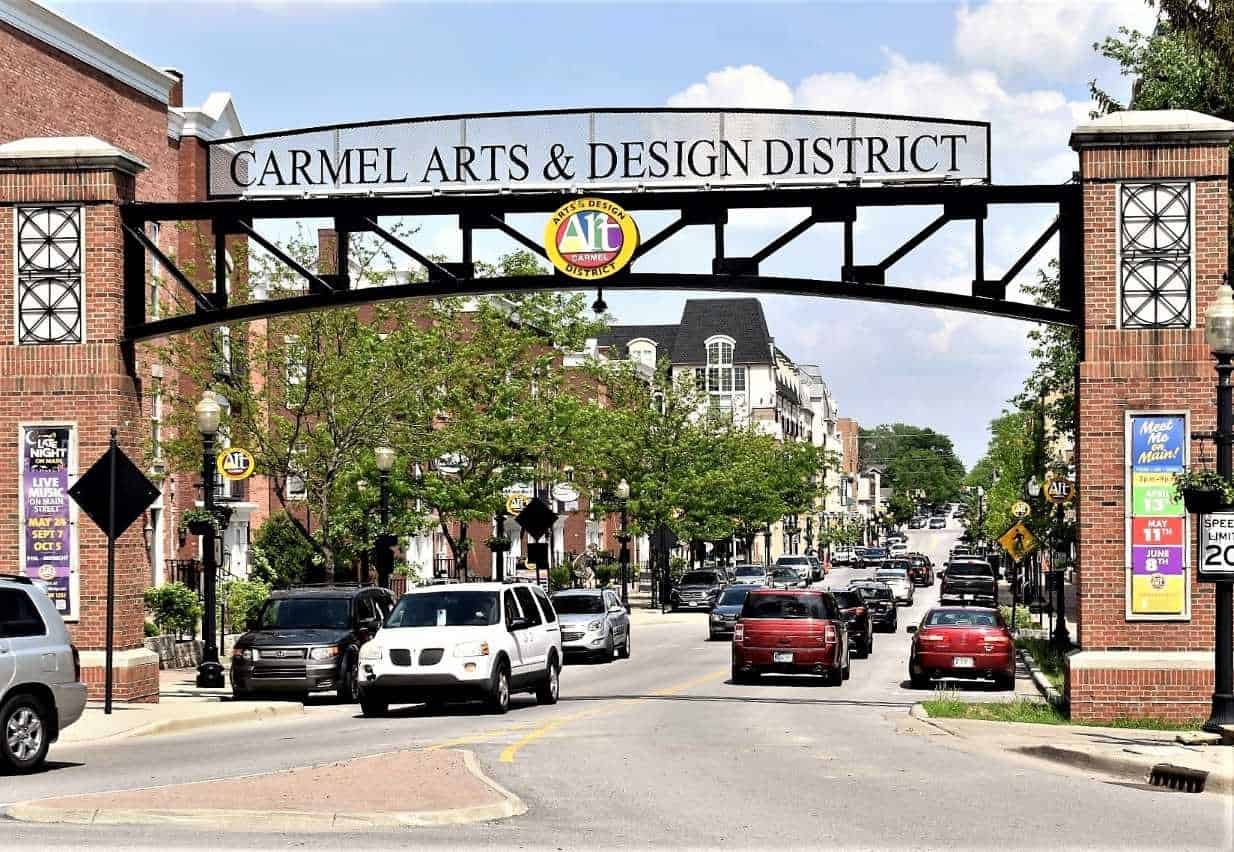
But the fad of “cultural districts” is a clue to what I think is meant by boosters of the idea of vibrant. They mean a neighborhood with lots of foot traffic, which entails, they hope, people buying stuff. Meals and drinks, hotel rooms and VRBO’s, souvenirs. People who read a lot of books and talk with their friends about them at a dinner parties at each other’s houses don’t count. People who meet up with a friend at the public library to watch a showing of that new Japanese movie don’t count. Because they don’t generate spending for the hospitality sector.
Arts policy starts with the cultivation of a taste for interesting art, or at least a taste for cultivating a taste, and when someone has that, they find it nice to be in a place where there are others who share in it. It doesn’t need busy streets, or a high number of galleries per capita, or digital light displays. A rich cultural life doesn’t need to be vibrant at all.
Arts and crafts, people, and musicians need cheap digs and commercial space. I think Greenwich village, before it became the upscale destination it is today, was an inexpensive place to live and work. We went to the Hopper exhibit at the Whitney a couple of years ago I think, and aside from the paintings of the city, which were wonderful, especially in that venue, I particularly remember his collection of theatre tickets. He went to the theatre all the time, and many paintings were of scenes he must have observed from the elevated subway . trains. I really like Japanese fashion. Derek Guy recently wrote a long thread on the proliferation of niche fashion and tailoring businesses in Japan. Part of what seems to make that possible, in addition to a culture that has a reverence for craftsmanship, is the abundance of very affordable small business spaces and dense affordable housing that means the small businesses have access to a large market of walk in shoppers. Add online sales to that and there is potential for very small businesses to be successful. Same for restaurants. Small businesses can occupy multiple floors of mixed use office buildings, and you get all those wonderful signs up the sides of buildings.
That Japanese reverence for craftsmanship also meant that they didn’t throw their makers “under the bus” the way that America did when it globalized. I recently heard David Frum say “there is no magic in making ingots”. He meant that an economy didn’t have to do manufacturing to be successful; I understand comparative value, but they were skilled people, who knew about what a journey it is to produce something good, and keep making it better, and to do it more efficiently, and they were just told they didn’t matter at all. Crafts people from all over the world came together to rebuild Notre Dame. I don’t know how they all talked to each other, but I’m sure they communicated. There is magic in making ingots, or doing anything well. It is what actually made America great. Cheap power is good too.
I live in Maroochydore, a beachside town in Queensland, Australia, which is vibrant but the exact opposite of the kind of vibrant you describe. It's buzzing at 5:30 am, when everyone is out running, cycling, or surfing. That's great for coffee shops, which are more plentiful here than anywhere in the world I think, but not so much for the rest of the hospitality sector (though people do eat out a fair bit). An 8pm digital light display would be an absurdity, the streets are deserted by then. True of the rest of Australia, but not to the same extent