
On being a liberal conservative

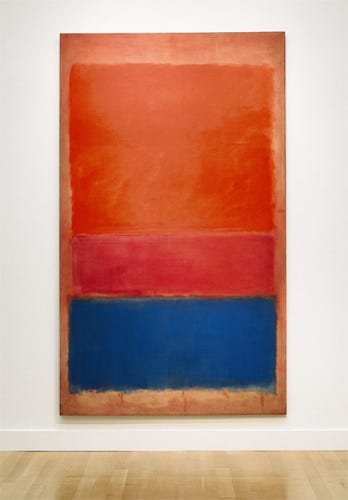
(Mark Rothko, (No. 1) Royal Red and Blue, 1954)
In the New York Times this week, Thomas Edsell has a long piece on liberalism, what it is, and what ails it: “Is This Liberalism’s Last Stand?” (gift link).
He begins with his own definition of liberalism - “the combination of carefully regulated free markets with individual and intellectual freedom” - but that leaves a lot to the imagination. What is called liberalism in the US is made up of various factions, which suggests that not everyone has the same idea what it means. It would be odd if they did.
Rawls, in his A Theory of Justice (1971), the great modern treatise of liberalism, paired a concern for individual and intellectual freedom with the need for equality, in terms of equal opportunity to participate in economic, social and political life, and to minimum standards of “primary goods”. But even with that narrow definition we run into problems where individual liberty (which does not extend to the right to directly harm others) conflicts with the pursuit of egalitarian goals, or in trying to more clearly define “equality” (there is a decades-old debate in political philosophy regarding which inequalities ought to be remedied and which are not of political concern). liberty and equality, like democracy, justice, and art, are essentially contested concepts, where their value as words comes not from their having a settled definition, but from our trying to figure out through conversation how we ought to define them, even though the conversation will never reach a decisive end. It’s the debate that is valuable, not the (non-existent) solution.
And liberalism too is essentially contested; the divisions we see between people who want to claim the title of Liberal (or the people who want to disparage the them, for that matter) will never be resolved. This ambiguity of definition makes Edsall’s essay, in which he takes the time to correspond with a range of smart people who have thought about liberalism, a bit of a sprawl: is the problem that “liberals” didn’t recognize that markets are good except when they are not, and require regulation? Is the problem that the “working class” (itself an elusive thing, and honestly not all that helpful a classification here) doesn’t actually like as much personal liberty as the state has gradually given to people, especially when they engage in self-destructive behavior? Have “elites” (again, who do we mean here?) used the parts of liberalism they like the most to put protective barriers around their wealth and privileges? The piece devolves into “what do Democrats need to do to win back support from ordinary folk,” the eight hundredth entry in this series, without really taking on what the title promised.
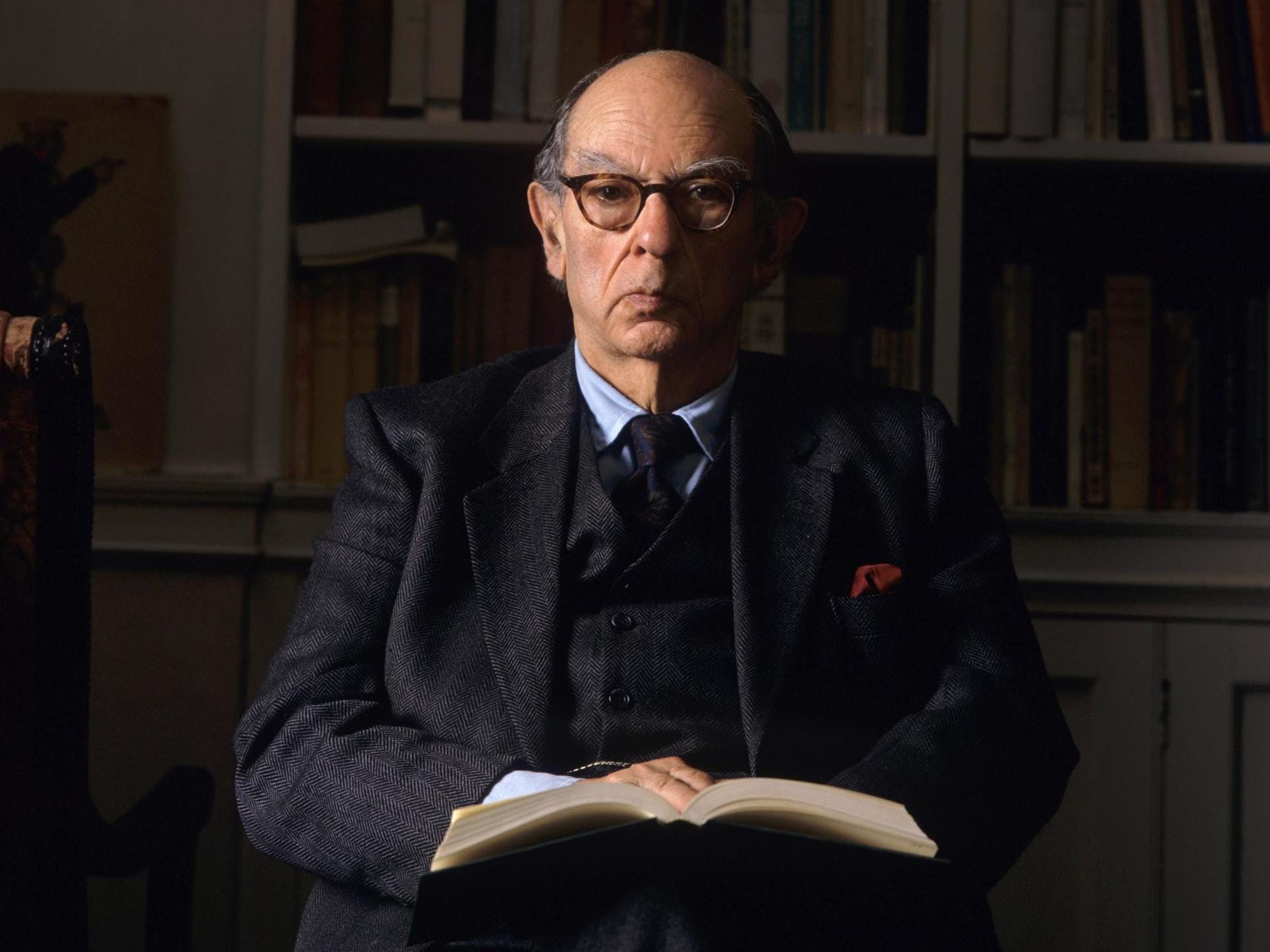
The piece led me back to one of my favorite essays (and, fellow teachers, a great one for undergrads), “The Pursuit of the Ideal” (1988) by Isaiah Berlin, the lead piece in his collection The Crooked Timber of Humanity. The gist is this: there are multiple things that are good for a society in themselves, and not simply as means to some other end: personal liberty; equality of respect and of being able to participate fully in society; equal treatment under the law; justice and mercy; adequate provisions of goods and services for the poor; security from foreign enemies, from fellow citizens, and from the state itself; aggregate economic income (net of environmental depletion); and, protection of valuable artistic and cultural traditions. In my experience, most people see at least a few things of value here, though how they weigh them will differ.
Berlin says there is no ideal balance between these ends, no perfect way to order society such that all are maximized. Some liberty must be sacrificed if we are to increase security, some aggregate income must be sacrificed if we are to pursue greater equality across the population in economic resources, justice must be tempered by mercy, and so on. Societies that have imagined a utopia that resolves all of these conflicts end in tyranny and murder, seen as justified since the end result would be eternal perfection. And so a functioning civil society must recognize that there will be a constant shuffling to and fro as some ends rise in importance to some people (it will never be all) and some decline. That’s what small-p politics, in its best sense, is. And it never ends.
With that in mind, can we say something about what it is to be a liberal, or a conservative?
Does a conservative place high value on preservation of tradition? You would think that would be fundamental to them, though this will often come at a price to personal liberty, which conservatives typically also value (in my last post I talked about (and criticized) a suggested “conservative” reading list that included Friedman’s Capitalism and Freedom, and Nozick’s Anarchy, State and Utopia, books that prioritize personal liberty above all else). But a liberal might also see value in protecting culture: Rawls was against public funding for the arts, since it was an unwarranted action by the state to tell people what sorts of things they ought to like, yet polls show most people on “the left” support it. A Quebecer might be liberal in championing the rights of individuals and equality between them, but still see a role for the province in infringing on personal liberty where necessary to preserve the centrality of the French language. A liberal might, or might not, think mandatory vaccinations are good, in the interest of public health security, though obviously at the cost of personal liberty. A conservative might see the degradation of our cultural norms as fine, actually, if it lets people enjoy what they want without being scolded by “elites.”
I am a liberal conservative, and I don’t think I am alone in this. There are many valuable ends, a plurality of good things for a society to have, and it doesn’t work for me to insist that any one of them takes absolute priority over the others, or that my personal weighing of these ends is the rational one, or that how I balance different factors will never change. After all, over time we learn things: what are the effects of deregulating economic activity, or personal behavior, in the long run? What are the costs of pursuing increased “security” through increased surveillance by the state? Being a liberal conservative also means recognizing that we will always have differences between us, though maybe not on strict liberal-conservative or Democrat-Republican or working class-elite lines. It means valuing liberty and the preservation of things we have become attached to, and knowing that you can’t always have both.
This is a better way to ask questions about the state of Liberalism in the United States in 2026. How have priorities shifted, if at all, between different people? It’s not a “last stand” of liberalism, nor is it a failed doctrine. It’s a ramshackle ship on an ever-changing sea.
My definition of liberalism is the ethos of tolerance, existential equality, individual rights, and market economics as formed by our political ancestors in Western Europe. I regard libertarianism as its purest contemporary expression, not that libertarians are always living up to its ideals. Western politics have been turning postliberal for a decade and a half, as both the progressives and conservatives give up on those four principles in increasing numbers, each blaming the other for the lapses with perfect blindness to their own. It has been a dismaying thing to witness.
I left my Econ degree behind me as soon as I received it, so I’m not fit to offer my thoughts; but here they are.
Liberalism and conservatism used to be united by a basic commitment to capitalism and then separated on the details of his to divvy the benefits of the system. Toss in an assortment of loosely connected social issues to excite both sides, since trade, tax, and budget issues really don’t get the average voter to tingle with passion.
But we’re moving past this in two ways. Trump has taken conservatism into authoritarianism, blatantly moving the spoils to those already spoiled: the rich get richer, the Christian get Christianer, the racists and misogynists get what they want and so on.
Countering that has been Bernie, now joined by AOC and Mamdani, not fully destroying capitalism but certainly willing to challenge if not destroy the idea of a free market. There’s a lot of momentum with this faction and it will be interesting to see if currently elected Democrats morph as quickly as Republicans did to conform to Trump’s insanity.
Are there any remaining conservatives in office why subscribe to your beliefs? Are they institutionalist Democrats?