
Do public policy schools need more conservatives and more conservatism?

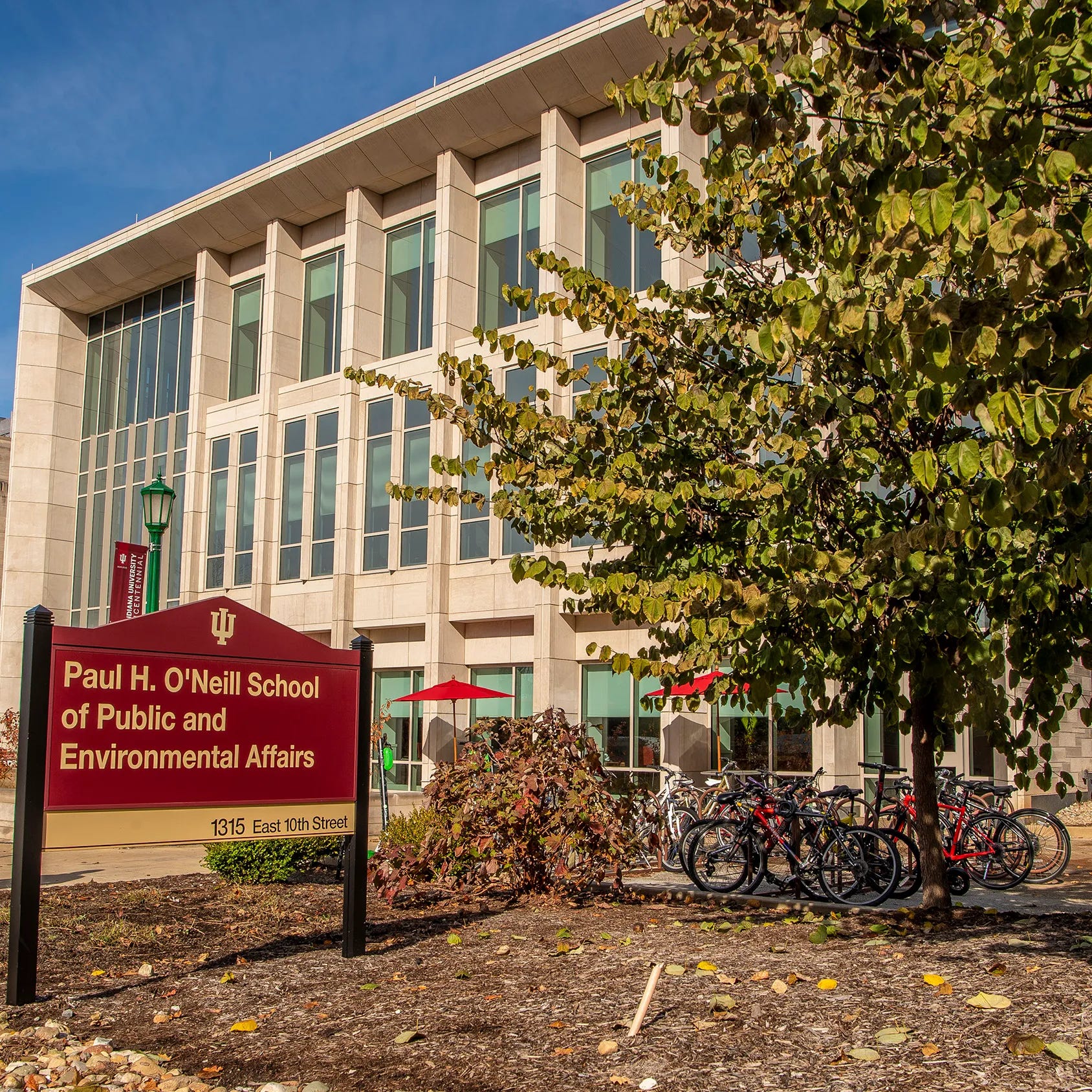
From the Martin Center, there is a new piece from two authors who work at right-wing think tanks, Frederick Hess of the American Enterprise Institute, and Andy Smarick of the Manhattan Institute, on what ails Public Policy schools in American universities. The umbrella complaint is that they are too left wing, and that this ought to be fixed. Their proposed solution is off the mark, in large part because their diagnosis of the situation is off the mark, but something can be gained from looking at their errors, because where they go wrong marks a problem with many conservative criticisms (and proposed remedies) of higher education in general, and not just policy schools. As someone who only recently retired from teaching at one of these schools, and who also spent four years at a different policy school, and who on many issues leans to a conservative approach, and even had students read some of the authors they suggest, I think I’m positioned to post a reply.
Let me summarize their piece:
Governing needs professionals in the civil service - it’s a job to be taken seriously.
The Trump administration has done a pretty poor job of taking public administration seriously.
But there’s a shortage of conservative public administration professionals.
“One reason is that the pipeline which prepares individuals for this work is exceptionally indifferent or hostile to conservatives. University-based policy schools are a big part of the problem.”
Surveys show profs in policy schools, as in academia in general, lean left.
“Too many left-of-center policy professionals operate with a caricatured understanding of the right. They don’t know what they don’t know. They confidently speak the language of power, oppression, equity, technocracy, and social justice; but fumble with the language of originalism, subsidiarity, nationalism, and ordered liberty like it’s a second language.”
“We’re not giving a pass to the right’s know-nothings or Trump’s performative minions. There’s plenty of blame to go around for a generation of would-be Republican policymakers more familiar with podcast riffs than public policy. … That said, a useful place to start would be by signaling that a range of thought is welcome, and that all students will be acquainted with some of the foundational thinkers and texts associated with the conservative governing tradition.”
There are classics of conservativism, great books by Burke, Tocqueville, Friedman, Russell Kirk, Hayek, Robert Nozick, that schools should start teaching, and teaching well.
“Policy schools that teach these texts will need scholars who can confidently and competently do so—who can teach these as if they’re speaking in a native tongue. And this is why policy schools should start with these texts. A commitment to teaching them well is an on-ramp to committing to hire faculty who can do so. That will help to broaden the faculty, send a critical signal to students, and enrich the discourse.”
So, where does this go wrong?
I’ll start by saying that I don’t disagree with one of their conservative ideas that ought to be taught: that public administration, like being a furniture maker or a teacher or a police officer, relies heavily on tacit knowledge that can only be learned on the job by observant and committed practitioners - there’s a lot that cannot be learned in books or in the classroom. I went into working in the public service with a PhD in Economics and found there was simply a ton I did not know about how government actually gets things done (Hess and Smarick might have name-dropped the conservative Michael Oakeshott here, but they don’t). I also agree that students can learn from some of the classics, although I would not go with their reading list. They are sweet to think that students in a public affairs program are assigned whole books to read, but if any prof asked their students to read Russell Kirk’s dreary The Conservative Mind in its entirety the class, even members of the local College Republicans, would be at the dean’s office with torches and pitchforks. Do they really think students ought to be reading Nisbet’s The Quest for Community? Some of the books they choose seem like an awful reach.
But I assigned a few of their authors. Milton Friedman’s New York Times op-ed on how it is the duty of corporations not to engage in charitable causes was a good discussion prompt in the module on how corporate governance works, and I had them read, though it is challenging, Hayek’s essay “The Use of Knowledge in Society”, a more important contribution (and only a dozen pages) than his sprawling book The Constitution of Liberty. And I had them read a few chapters from James Q. Wilson’s Bureaucracy, which really is an insightful book.

Where this goes wrong is that they want to get to the conclusion that policy schools ought to hire more conservatives, to diversify the faculty and students, make these places more equitable and inclusive, but they just don’t have a path to get there.
First, let’s look at the diagnosis: faculty are too left-wing. This is a point I have gone on about before, and so apologies for repeating myself. The conservative party in the United States is the Republican party. The Republican party is now wholly, completely the party of Donald Trump. This is a party and an administration that has no interest, none, in policy or administrative expertise - they actively and vocally disdain it. Wilson’s careful study of the importance of organizational culture in administrative agencies has as much relevance for Republicans as “The Faerie Queene.” They call professors “the enemy”, and dick around with research funding in ways that are massively disruptive and, in the end, expensive. Of course the vast majority of faculty don’t like Republicans. And so even faculty with conservative dispositions, like, for example, me, want nothing to do with them. And in a survey I would end up being counted as “leans left”, because I want nothing to do with them. That there is a mismatch between the political preferences of university faculty and the general population is always seen on the right as a problem that universities need to fix. But that’s not where the problem lies. Faculty are not going to support an explicitly anti-intellectual movement.
Second, Hess and Smarick don’t seem to have looked carefully at what policy schools actually do, what a degree program looks like in practice. What they are not doing are hosting debates for whatever has caught the eye this week of op-ed page editors and television news channels, a sort of twice-weekly Crossfire. Look at the core curriculum for a Master of Public Affairs - it is very technocratic (I might even argue too much so). Economics, budgeting, stats, administrative procedures and public law. There aren’t conservative or left-wing ways to teach students how to figure out who between consumers and producers bears the burden of an excise tax, or how difference-in-differences statistical analysis works, or how the federal court system is structured. If there is an underlying value system for what policy schools teach, it is, much to the chagrin of the left, what has come to be known as neoliberalism: analysis of data to evaluate how individual and firm behavior can be shaped through incentives to further achieve policy goals. In our school there were people who worked for Democrats, and who worked for the Bush administration, and they taught the same material, without noticeable differences. The methods of benefit-cost analysis don’t change with prior political affiliation.
“Too many left-of-center policy professionals operate with a caricatured understanding of the right. …They … fumble with the language of originalism, subsidiarity, nationalism, and ordered liberty like it’s a second language.” But those are topics for a political philosophy elective that are just not central to the professional degrees offered by policy schools.
They have become even less central as a result of Republican-led state governments, like the one in Indiana, insisting that the sole purpose of university education is the teaching of practical employment-related skills. Reflections on the Revolution in France? How are you ever going to use that? State Republicans are now the party of Gradgrind, in another departure from what had been conservative intellectual tradition.
Third, they make the error that so many right-wing commentators make about universities, believing that ideas can be divided by a line separating “right” and “left”, and the “right” side needs more representation to achieve “intellectual diversity” (although in state legislation, “intellectual diversity” means “don’t say anything that might make a Republican feel bad”). But this is such a poor way to think about ideas. Let’s take an actual policy issue that I wrote a whole book about: is it right for a government to take tax revenues and devote them to subsidizing the arts? What is the conservative position and what is the “left” position? It doesn’t line up that way, and the various ideas that people have formed on this question cover a wide range of thinking about policy issues. There are conservative supporters of public arts funding, and progressive opponents. Free trade? Military intervention abroad? The balance of power in a presidential governmental system? What are the conservative positions, these days? What were they forty years ago? It’s just not an interesting way to think deeply about issues.
I was asked to give a talk in a moral philosophy class about Kantian/Rawlsian deontological ethics, and the comparison to utilitarianism, and the communitarian critique of each of these ways of thinking. In the lecture I said to students directly: don’t try to fit these ideas into whether they are right-wing or left-wing, and, if you see yourself as a member of team-right or team-left (which I do not recommend), don’t ask how you are supposed to choose a position on a right-or-left basis. It stifles thinking. Ideas are bigger than our impoverished political stances.
Hess and Smarick recognize that the right, as it actually now governs when in power in the state house or in DC, has no interest in the history of conservativism in political and moral theory. It barely has an interest in traditional conservative government practices - Trump is more aggressive in trying to use the state to direct economic activity than was the left-wing government under whom I worked in Canada, and the Republican tolerance of his personal corruption is hardly what I would find in the Federalist Papers.
Which leaves us asking: what’s their point? Policy schools should teach their students great (and some, frankly, not rising to the level of great or memorable) books from conservative authors … for what? What students would want this? Hess and Smarick don’t seem to have put much thought into their reading list, and it’s odd that there’s not a single book on their list written in this century (I’m surprised they didn’t include Patrick Deneen’s Why Liberalism Failed, which I would nominate as the most influential serious book of conservatism in this century, even if you disagree with its analysis - students might even be willing to browse it).
This is a work of question begging. Their desired conclusion is that policy schools need more conservatives, and they reach here and there for some kind of argument that would lead to that conclusion, finally landing on “you need conservatives to teach these books that ought to be added to the curriculum.” But they don’t understand what policy schools do, they haven’t looked in any sort of depth at the curriculum, and they haven’t even thought deeply about how they books they list would fit into a coherent program. It’s a job program for conservatives, and that’s about it.
The "caricatured understanding of the right" stuff reminds me of Jonathan Haidt. Before he reinvented himself as an expert on teenagers, his main shtick was as a concern troll. explaining to liberals that their perception of conservatives as racist, misogynist and fascists was totally wrong. Actually, Haidt claimed, they valued purity and obedience to legitimate authority. We saw how that turned out when they wll turned to Trump
There is no frontier knowledge in civics that I can see.