
In Lithuania
Are you my cousin?

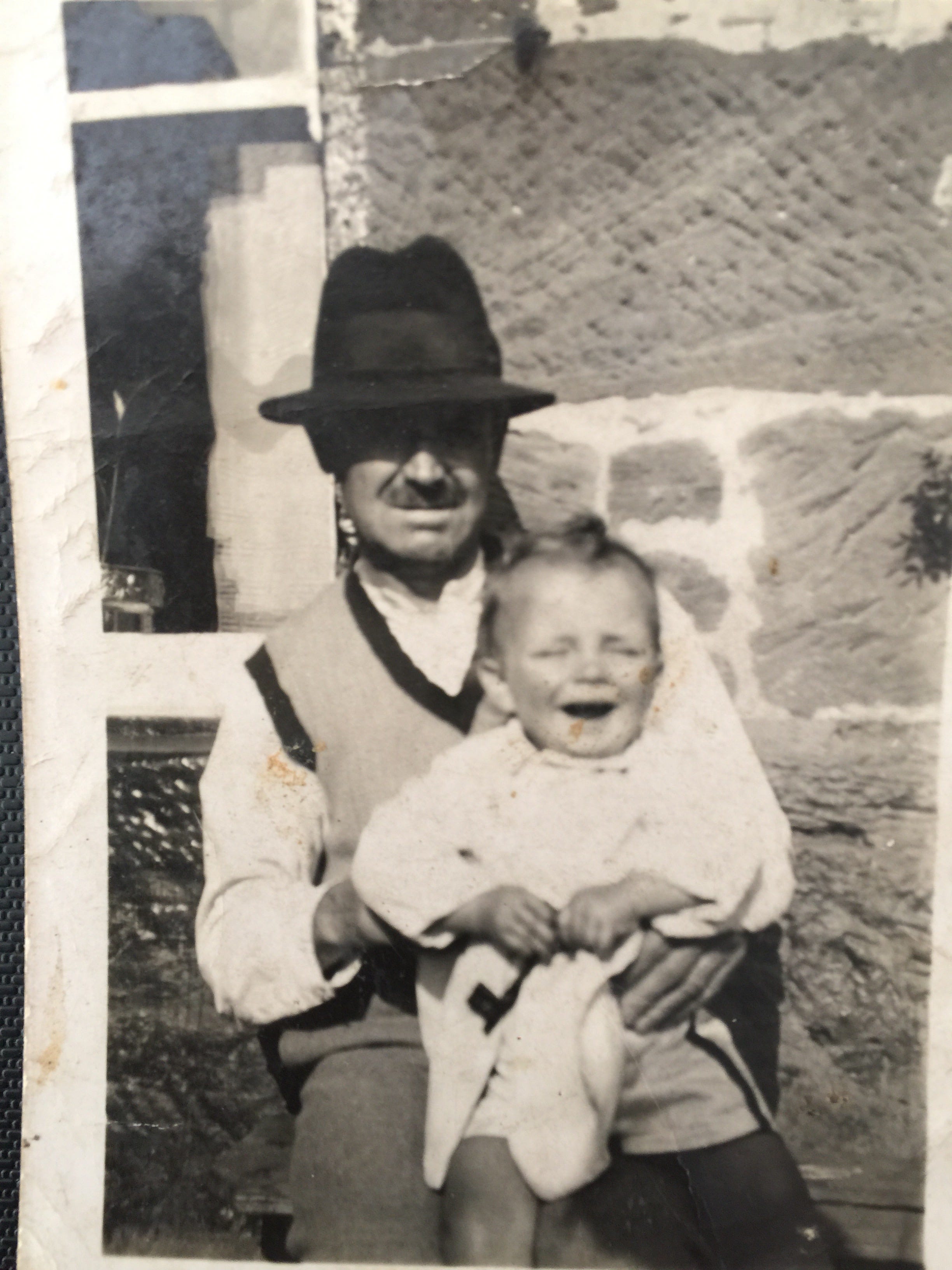
This is a photo of my great-grandfather holding my mother, from 1934. It was taken in Lanarkshire, Scotland (my mom would soon move to Tillicoultry where she grew up). He was Lithuanian. Around 1900-1910 (I have no record of it) he was among the few thousand migrants who made their way from pretty bad conditions under the Tsar to Scotland, and work in the coal mines. Here is a short article about them: https://www.culturenlmuseums.co.uk/story/lithuanians-in-lanarkshire/.
Although there were Lithuanian churches and papers and social clubs, over the years there was an integration such that for the most part these were lost. This part of my family changed their name from Wisgard to Brown, because what could be more Scottish than that?
My mom always wanted to come here, but never made it. In her very old age she started remembering songs in Lithuanian from her early childhood I had never heard before - the mind is a strange thing.
So when I had a conference in Poland, I didn’t want to miss the chance, and I got myself a bus ticket.
Vilnius is a lovely old city - I’m still in my first twenty-four hours here but I’m looking forward to a few days of exploring.
I have no family records, and I suppose with lots of time I could do a “finding your roots” research project, though I’ve got a feeling I wouldn’t get far. So I’ll just imagine various people I pass in the park might be a third or fourth cousin, and leave it at that.
The start of a simple ethnographic study: rather than learning to say “hello, may I have a coffee?”in the local language,learn to say “hello, cousin, may I have a coffee?” Some will think you a hapless tourist, others will ask you about your word choice. Snowballs from there.